
What Is Freeze-Dried Fruit?
Process, Benefits & Applications in Food Manufacturing
Freeze-dried food has become highly sought-after ingredients in modern food manufacturing and households. Premium snacks, breakfast cereal, muesli bars, ice cream are just a few examples of its wide application. However, what exactly is freeze-drying and why do the quality focused food brands choose it over lower-cost alternatives? As a reliable European bulk supplier, we give you the facts.
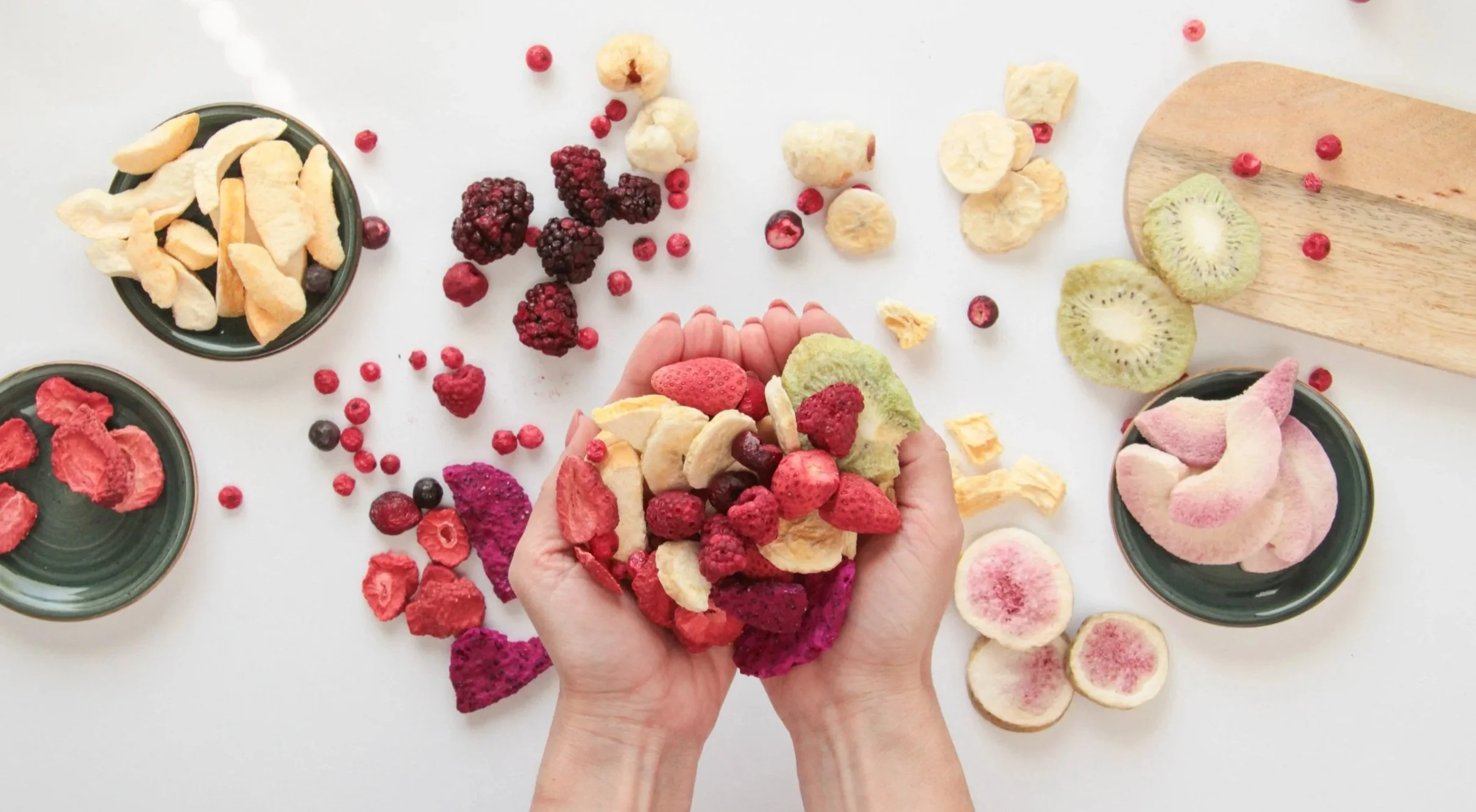
Nothing New Under The Sun
Freeze-drying (or “lyophilisation” in technical terms,) is a process that removes moisture from fruit while helping preserve its original structure, colour, aroma, taste and nutrients. This method is not new. Already in the 13th century, the Incas in Peru used early freeze-drying techniques to preserve potatoes and deer meat. They let food freeze overnight, dried it in the sun, and then squeezed out the remaining moisture by stepping on it.
Although this method had its merits, modern food manufacturing requires much more effective and hygienic approach.
The Freeze-Drying Process Explained
Sourcing premium quality fruit starts at specific plantations. We select raw materials while upholding strict hygienic conditions, pesticide limits and ethical norms. We personally inspect these sites, verify the selected fruit, and apply our expertise in preserving its natural quality. Fruit preservation runs in three distinct phases: freezing, primary drying and secondary drying. Next, fruit preservation runs in three distinct phases - freezing, primary and secondary drying.
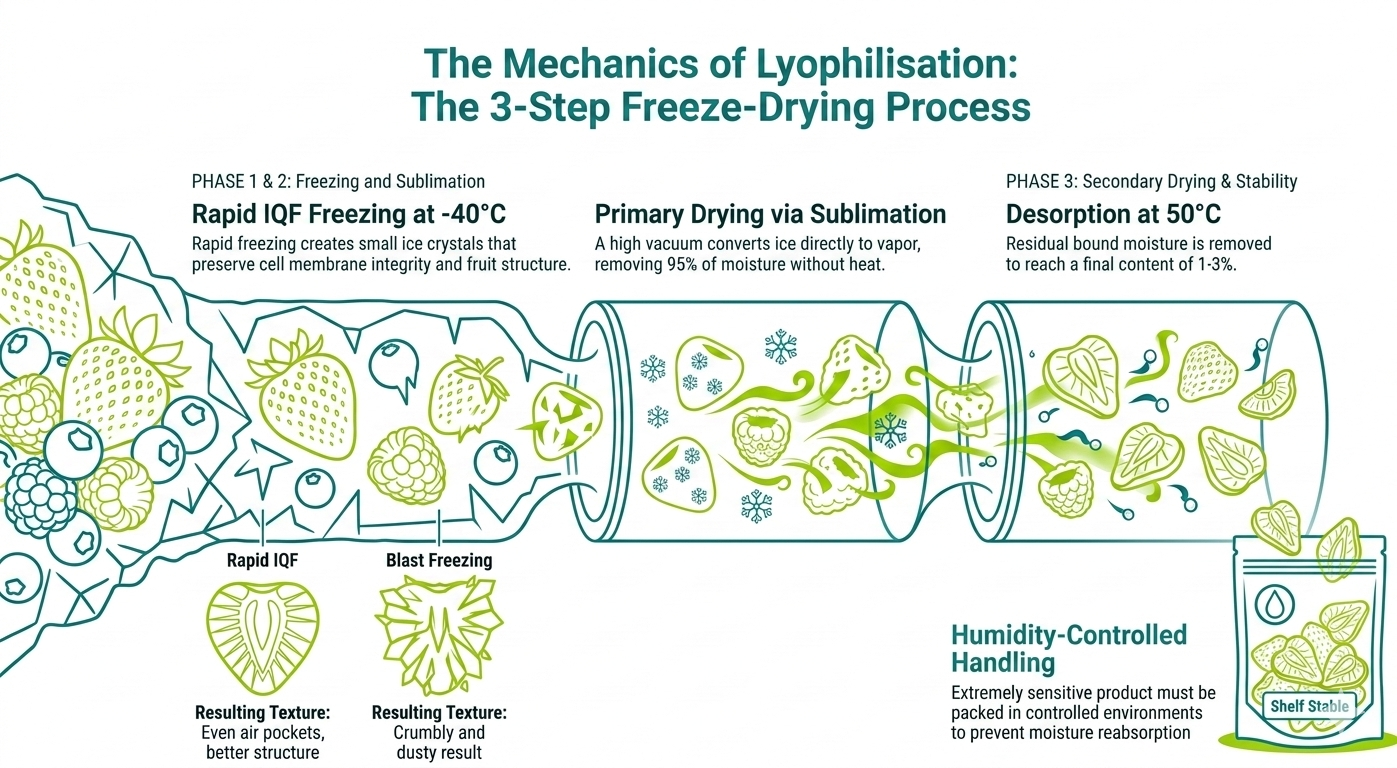
1. Freezing → The fruit is rapidly frozen to as low as -40°C. This locks in the cellular structure. Our IQF (Individual Quick Freezing) method produces small crystals within the fruit cells. In the later phases, these leave just small air pockets. Fast freezing helps limit ice crystal growth, supporting better structure and lower breakage after drying. Slower freezing can increase the risk of larger ice crystals and a more fragile final texture.
2. Primary drying (sublimation) → We place the frozen fruit under a high vacuum. (0.5–0.6 mbar). At this pressure, ice crystals convert directly into water vapour. This step takes up to 30 hours per batch, removing roughly 95% of moisture. Heat damage is significantly reduced compared with conventional hot-air drying, because most moisture is removed under vacuum at low product temperatures.
3. Secondary drying (desorption) → Residual moisture is removed at temperatures up to 50°C. This brings the total moisture content down to 0–3%. After this stage, the product is extremely sensitive to humidity. Any handling must be done in a humidity-controlled environment. This prevents the product from reabsorbing moisture before packing.
The result is a lightweight, shelf-stable product. It rehydrates almost perfectly and retains much of the colour, aroma, vitamins. nutrients and taste of fresh fruit.
Why Do Companies Choose Freeze-drying?
In search for the ideal combination of quality and price, food manufacturers and suppliers usually compare freeze-drying with other methods of food preservation such as hot-air drying and spray drying. Each method has its specific use, however freeze-drying consistently delivers superior results across all critical quality metrics, especially where colour, flavour, structure, crunchy texture and rehydration performance matter.
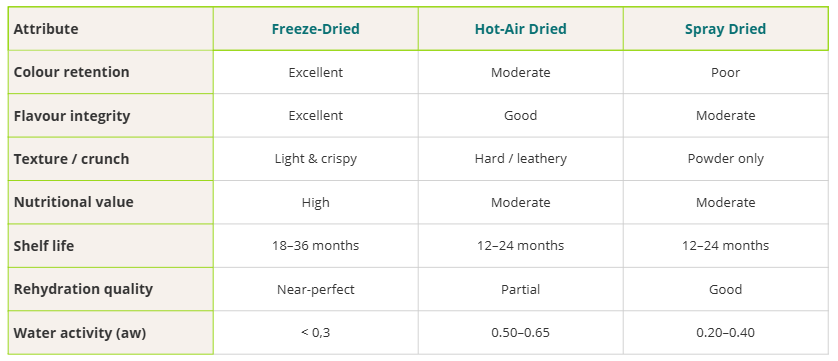
*values depend on product specification, packaging and storage conditions
The absence of high heat drives most of these advantages. Heat-sensitive vitamins (particularly Vitamin C) are preserved at far higher levels than in conventionally dried fruit.
Fresh-fruit flavour is better protected than in many high-temperature drying processes. Cellular structure is also better maintained, which supports the distinctive light, crispy texture of freeze-dried fruit.
This produces the distinctive light, crunchy texture that sets freeze-dried fruit apart in every application.
Treasure Inside
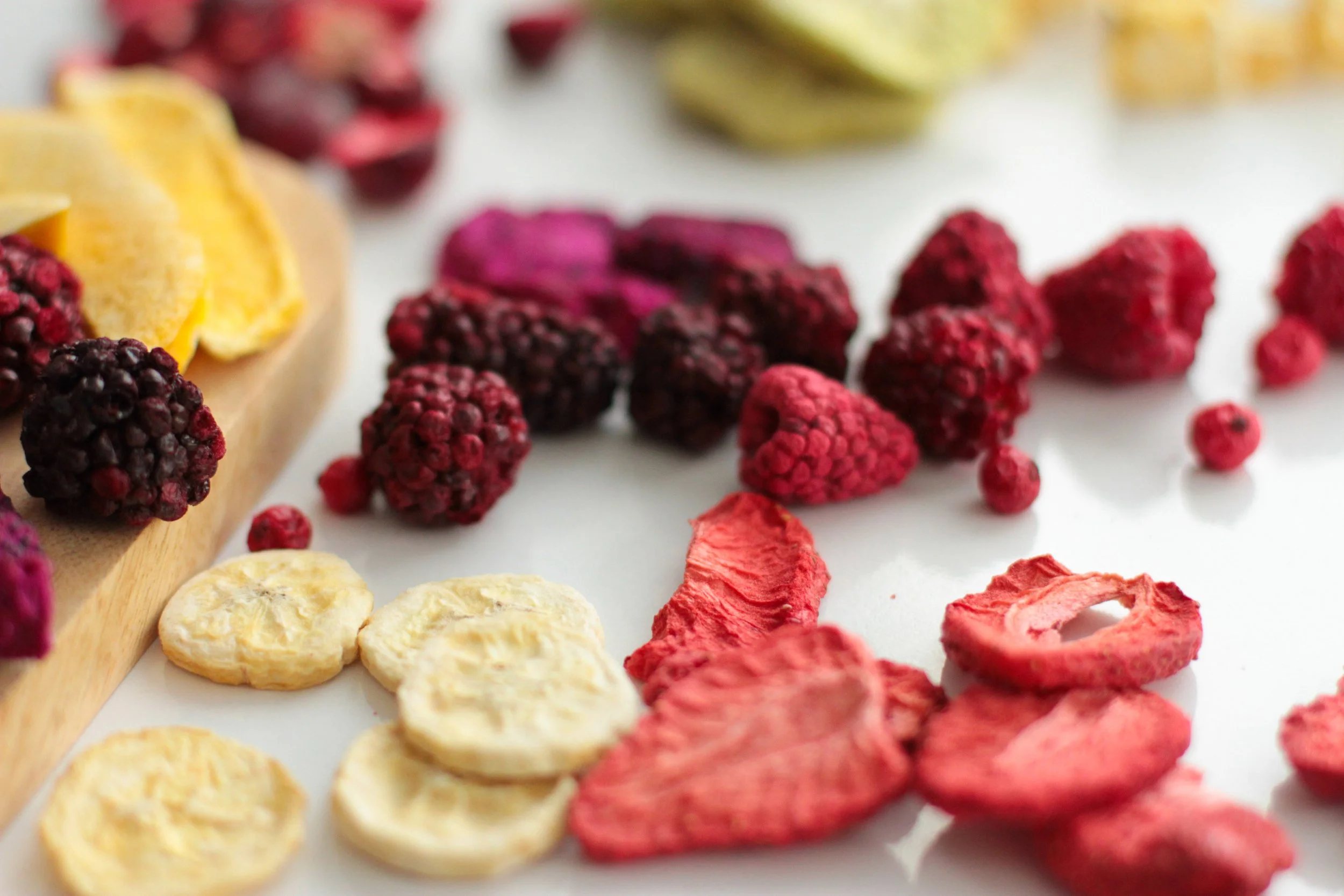
Thanks to its flavour integrity, long shelf life and superior quality, freeze-dried food hides a true treasure within. It has found its way not only to fruit producers and bulk wholesalers but also into households. The most common products include traditional fruit snacks, particularly banana and strawberry slices, as well as more exotic options.
However, freeze-dried fruit can also be used in a variety of culinary applications. You can prepare a healthy breakfast with black currants, decorate sweets with natural fruit powder or bake French macarons with freeze-dried figs. The only limit is imagination.

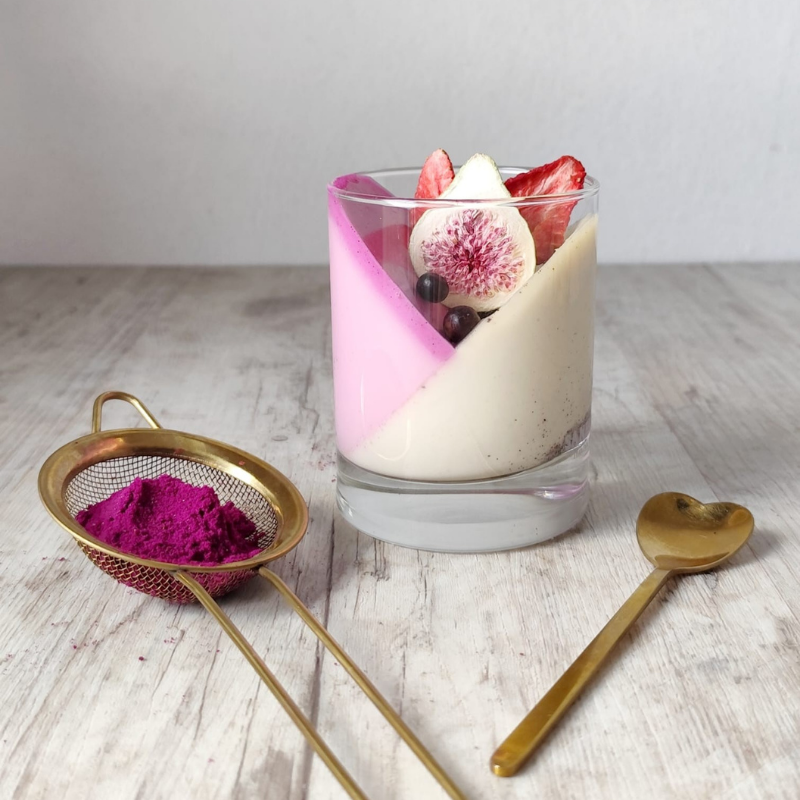
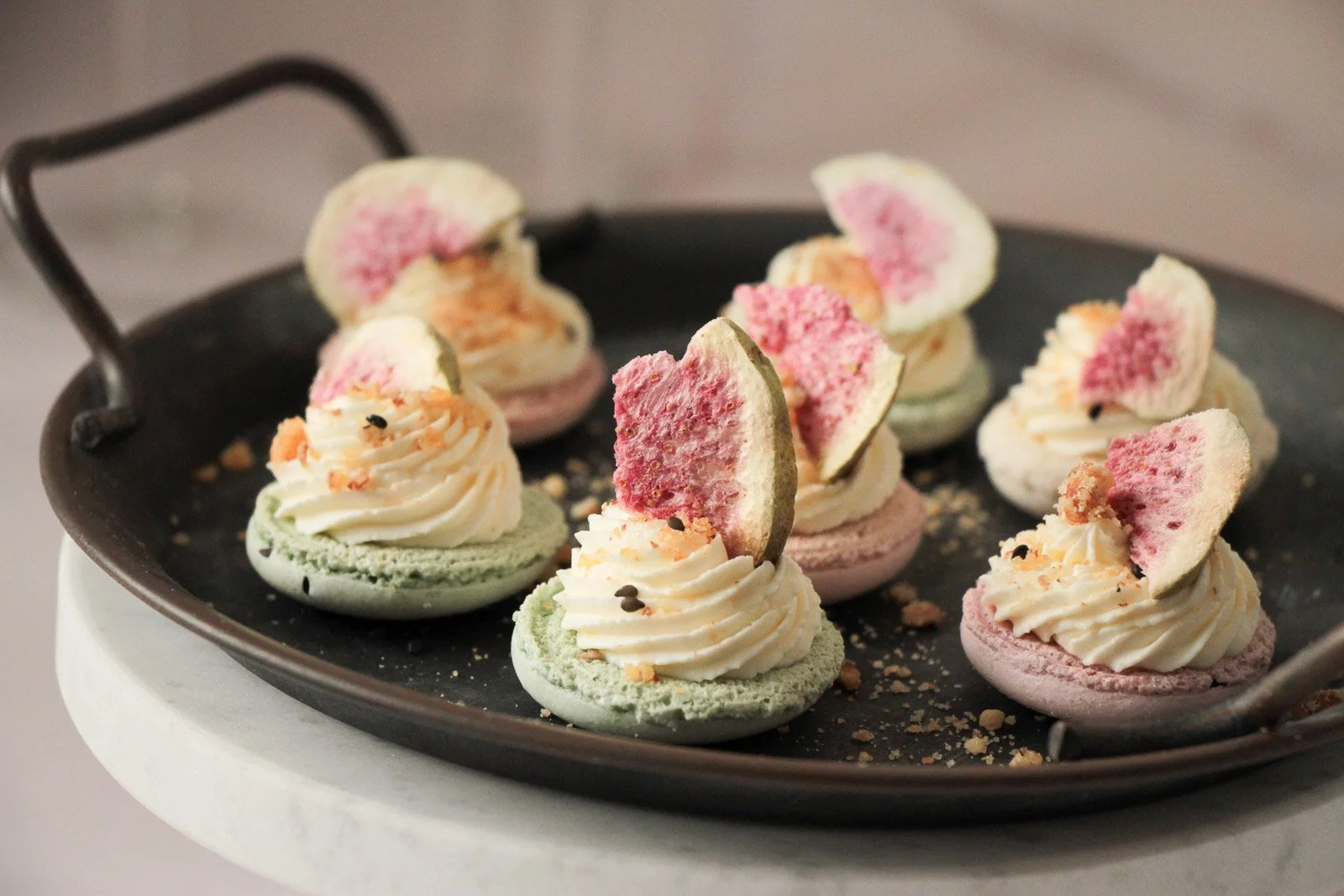
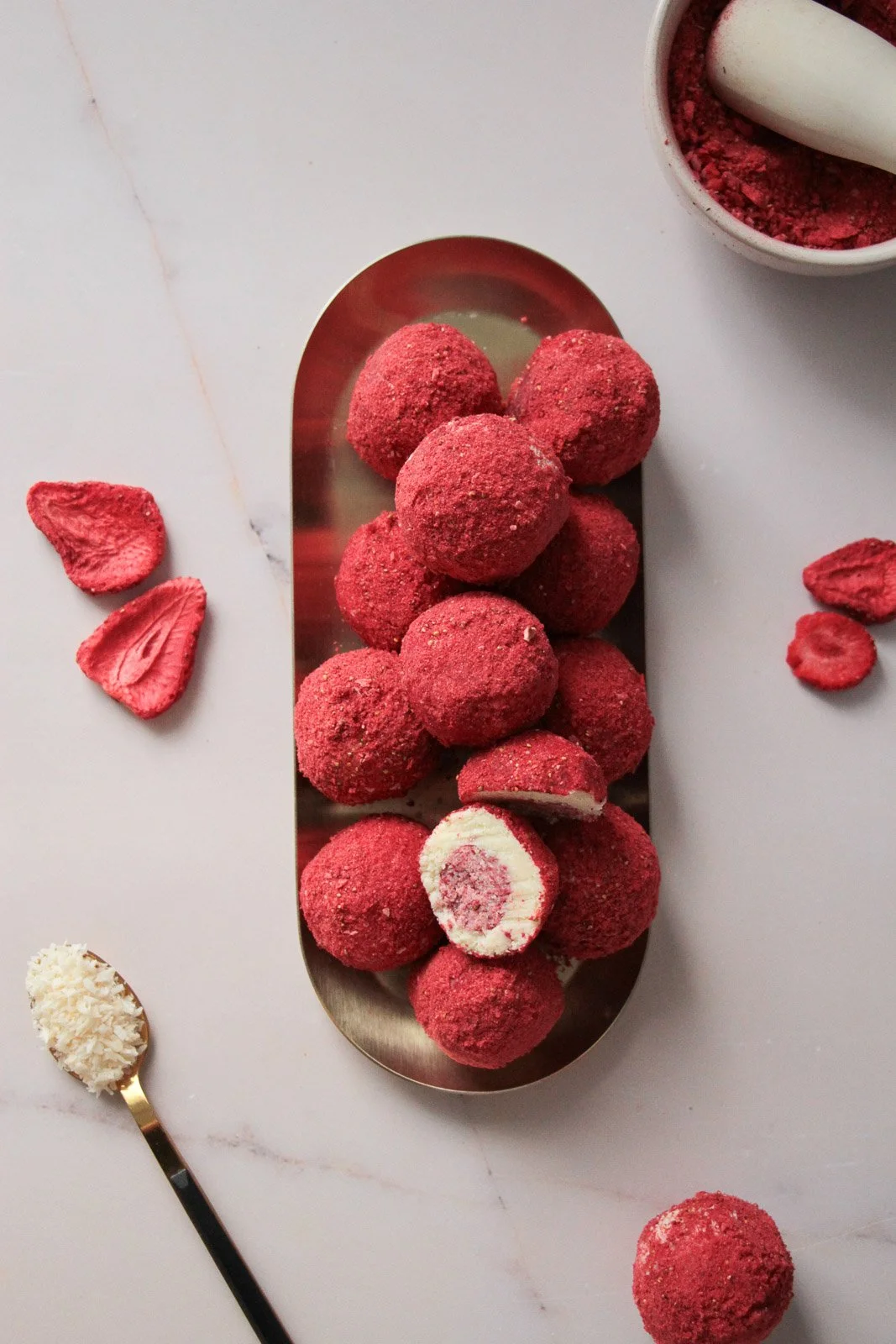
We provide reliable access to high-quality freeze-dried fruitingredients for your production needs. As a trusted partner for food manufacturers, bakeries, confectionery producers, beverage brands, cereal producers, and nutrition-focused applications, we support your product development with ingredients that combine natural fruit character, long shelf life, easy handling, and consistent quality.
Our diversified network of qualified suppliers, combined with local EU stock, adds another layer of supply security. This helps reduce exposure to global supply disruptions and supports greater continuity and flexibility for your production planning.
Our products are available with relevant certifications, including IFS, BIO, Kosher, Halal, and Sedex. This helps support compliance with strict operational, quality, and sourcing standards across modern food production.